Track record
Accumulated experience
More than ten years in business and over five hundred projects delivered as consultant,
contractor and construction supervisor. The figure matters less than its composition: the
track record was not built by repeating one kind of commission, but by sustaining distinct
technical fronts at the same time and taking on, within each of them, projects of
increasing complexity.
That progression is deliberate. Each service line was consolidated on mid-scale projects
before taking on major works, and today the company can integrate several disciplines under
a single technical coordination — which is where the risks in an infrastructure
project tend to concentrate.
500+Projects delivered
10+Years in business
8Engineering fields covered
3Roles: consultant, contractor, supervisor
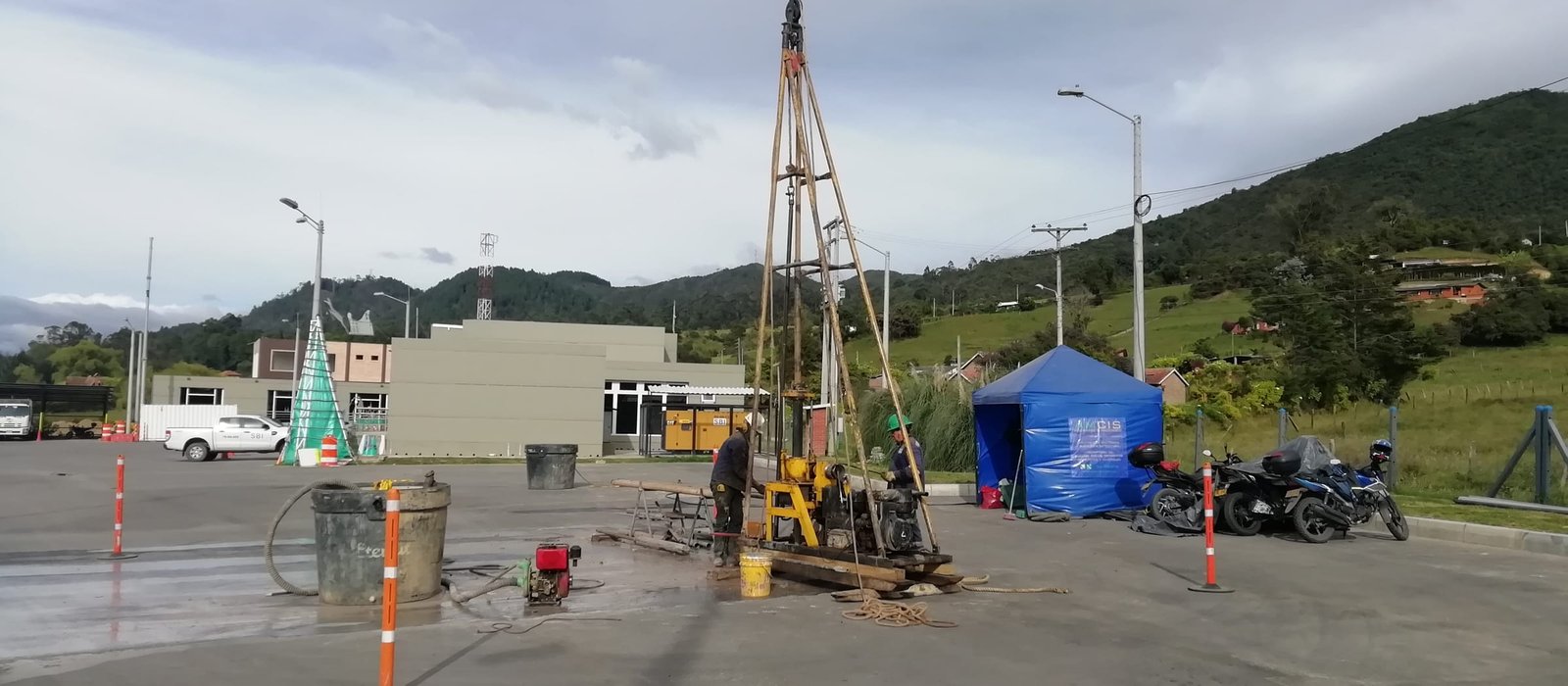
Geotechnics and ground investigation
From characterisation campaigns for individual buildings through to the investigation of
complete road corridors on fourth-generation concessions. We have carried out rotary drilling
with continuous core recovery, standard penetration and vane shear testing, undisturbed
sampling with Shelby tubes and seismic refraction lines; investigation for spoil disposal
areas; and scour studies for bridges and retaining walls across several functional units of
a single corridor.
Structures, pathology and seismic vulnerability
Design of residential and industrial buildings and of highway structures and, at the
diagnostic end, assessment of structural pathology and seismic vulnerability across sets of
up to twelve structures —box culverts, road bridges, footbridges and culverts—
belonging to a single urban corridor. The same capability has been applied to airport
terminals in service, where diagnosis and strengthening design must be resolved without
interrupting operations.
Hydraulics, sanitation and water treatment
Assessment and updating of foul and storm sewerage master plans at the scale of a whole
urban area; design and renewal of water supply and sewerage networks by sector; drainage
systems and runway safety areas in airport infrastructure; detailed hydraulic design and
water quality studies. The scope covers both the design and the construction of the networks.
Risk management and land-use planning
Studies for incorporating the management of landslide, flood and flash-flood risk into the
land-use planning instruments of municipalities across different regions of the country, plus
slope stability analysis and studies of mass-movement phenomena in built-up urban settings.
Transport infrastructure
Geotechnical and pavement components for concession road projects, bypasses and ring roads;
airside studies for eight regional airports within a single commission; and investigation and
testing for the adaptation of depots and the extension of mass transit corridors. These are
projects where the working window is short and site work competes with live operations.
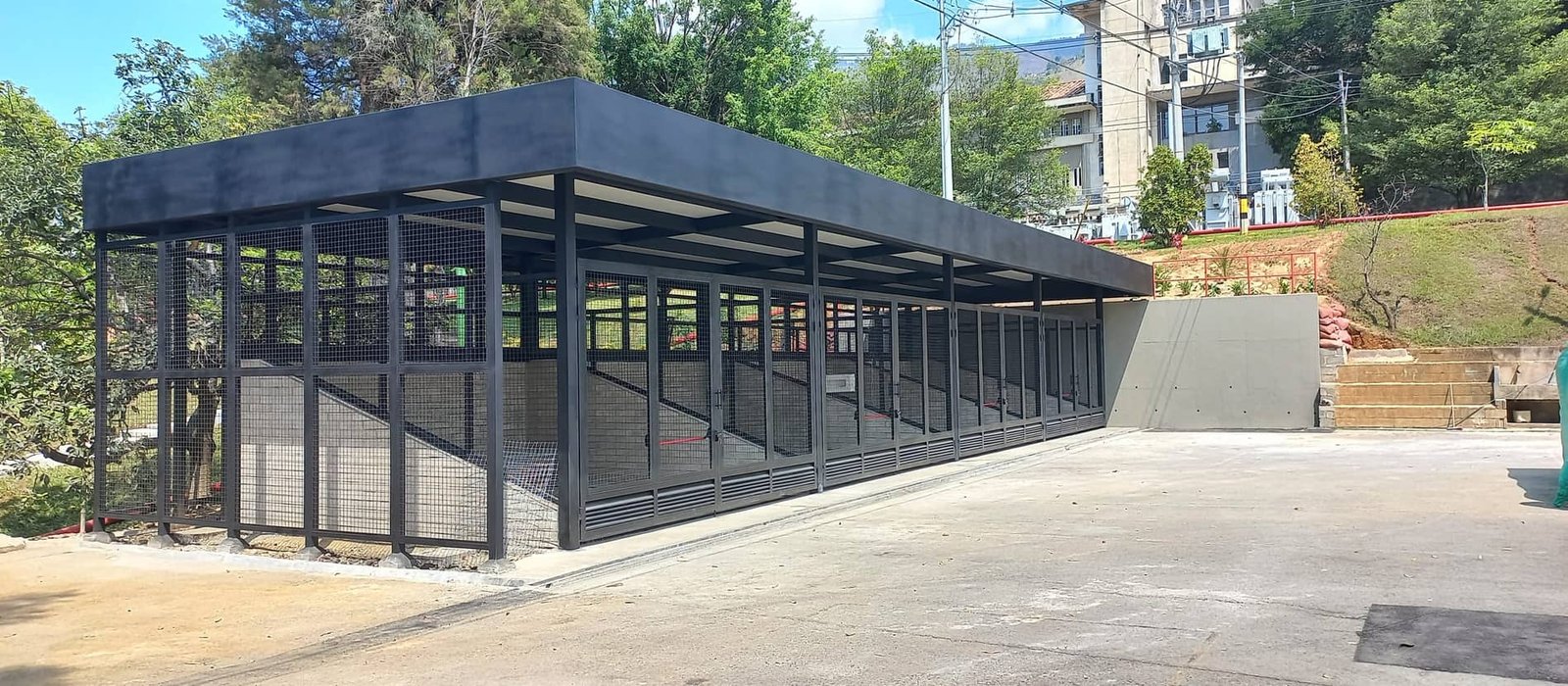
Construction and civil works
Institutional and industrial building —including a 10,326 m² warehouse with 15 m
clear height—, civil works at water treatment plants, hydraulic control structures,
pavements and internal roads for industrial parks, and the adaptation of productive
infrastructure in remote territories, with works exceeding 10,000 m² built.
Power transmission infrastructure
Nationwide framework contracts, currently active, for managing the risks associated with
ground instability at tower and substation sites. They bring together geology, surveying,
geotechnics, structures and hydraulics under a single technical coordination, serving requests
spread across the whole country within tight response times.
Integrated construction supervision
Technical, administrative, financial, accounting, environmental, social and legal oversight
of construction and consulting contracts, including supervision of seismic vulnerability
studies and strengthening design. It is the line that forces us to read a project from the
other side of the table, and that reading feeds back into how we run our own contracts.
The level of complexity reached
The complexity of a project is rarely explained by its budget. In our experience it has been
measured along three axes, which tend to appear together.
Scale and disciplinary integration. We have moved from single-discipline
commissions to contracts that require foundations, slopes and pavements to be resolved
simultaneously within the same stretch, or geotechnics, pathology, seismic vulnerability and
structural design on the same building. In such cases the challenge is not technical in the
abstract: it is one of coordination, because the outcome of one discipline conditions the
scope of the next.
Geographical spread and access conditions. We have worked from the San Andrés
archipelago to the Eastern Plains, and from Chocó and Guaviare to Boyacá, Nariño and La
Guajira, with equipment and personnel logistics in areas of restricted access where moving a
drilling rig is part of designing the project.
Working on infrastructure in service. Much of the most demanding work was not
new build but intervention on assets in operation —air terminals, treatment plants, mass
transit corridors, urban networks— where the working method must fit narrow intervention
windows and the client's operational continuity.
The in-house laboratory for soils, rock, pavements, concrete and materials is what sustains
that capability: it lets us control response times and the traceability of every result
without depending on third parties, which is precisely the constraint that tends to compromise
programmes on projects of this kind.