01 — Quote your
Soil investigation
We characterise the ground beneath the site and turn that information into design
parameters: which type of foundation suits, at what depth to found it, what bearing
capacity the ground allows and what settlements to expect.
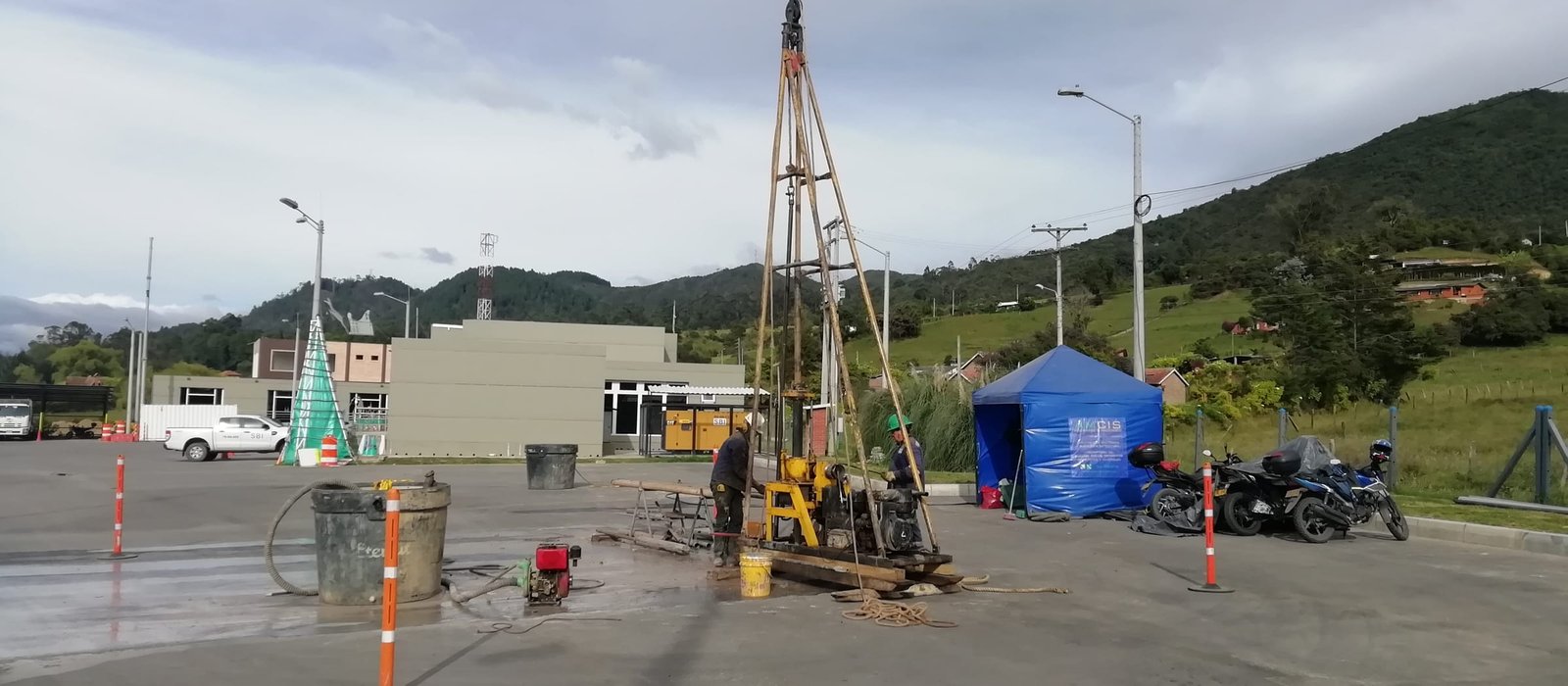
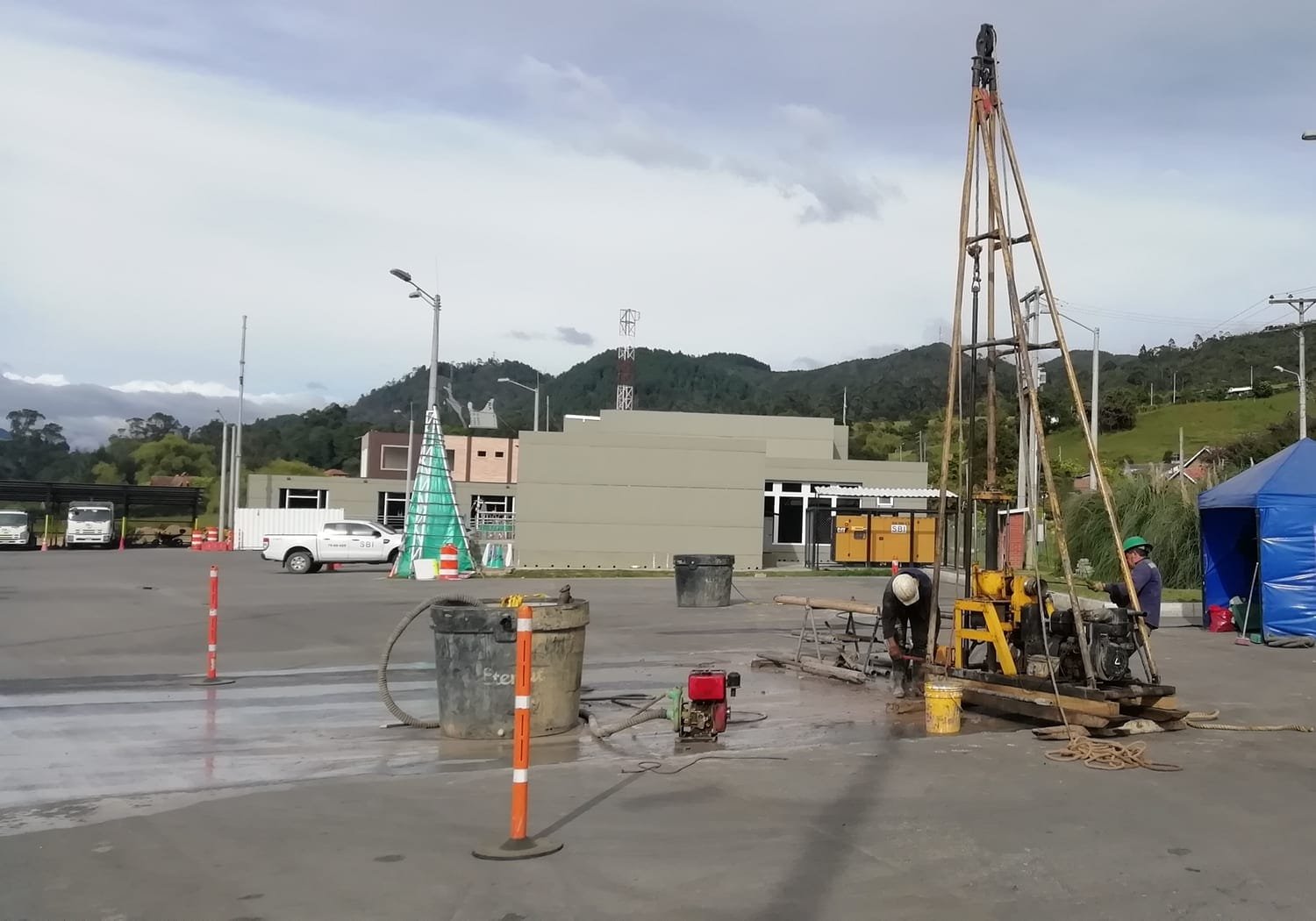
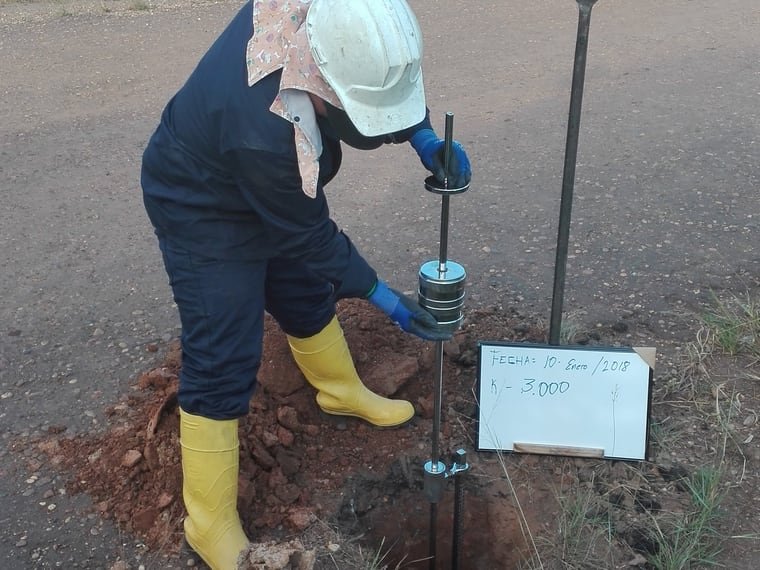
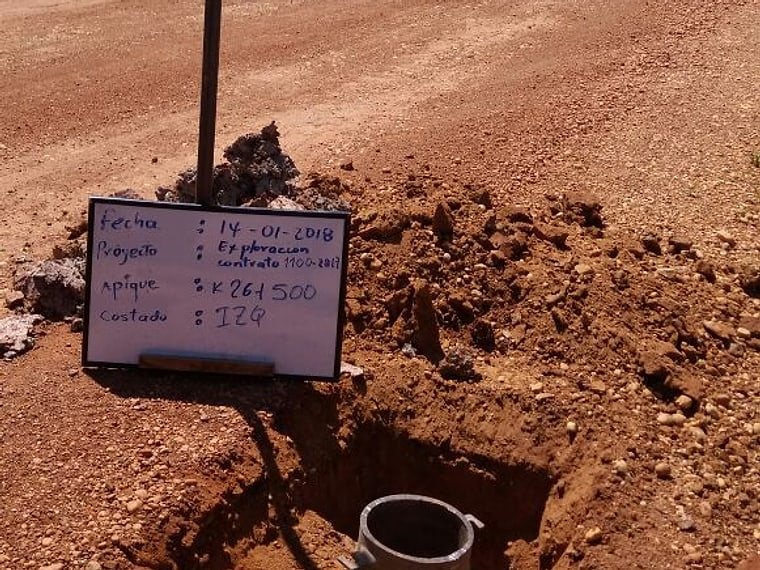
Our soil investigations cover all three stages and none is subcontracted: fieldwork is
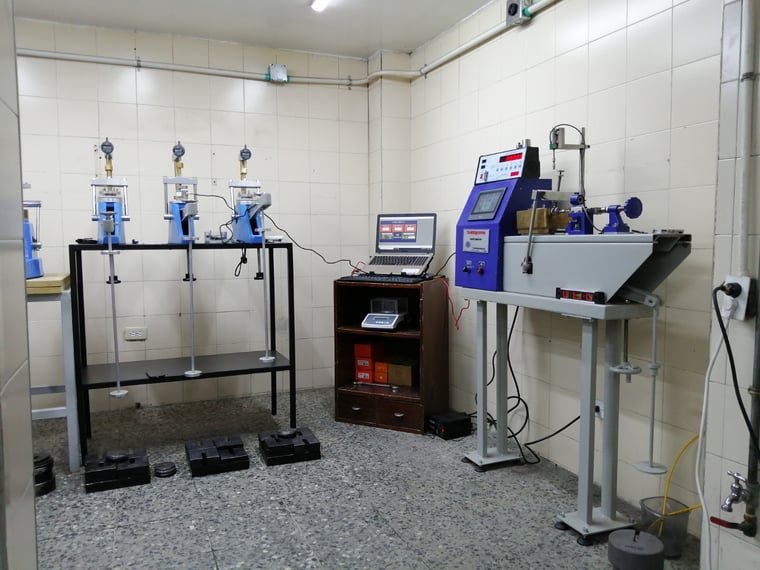
carried out with our own rigs, samples are processed in our laboratory, and the design
is signed by the same team that saw the ground. That shortens delivery times and means
any question about a result is answered by whoever produced it.
- Ground investigation: boreholes, test pits and in-situ testing
- Laboratory classification and strength testing under INV E standards
- Foundation design with calculation report and soil profile
What the standards require
- NSR-10, Title H. A geotechnical study is mandatory for every building. The Regulation classifies the construction unit into categories —low, medium, high and special— according to the number of storeys and the maximum service loads, and that category sets the minimum number of boreholes and their depth.
- Investigation and characterisation. Title H sets the requirements for the fieldwork, the sampling and the laboratory testing needed to define the strength and deformability parameters of the soil.
- NSR-10, Title A. The study must establish the soil profile for the site, which is what allows the local site effects and the seismic design spectrum to be defined.
- Foundations. Title H governs the geotechnical design of shallow and deep foundations, and the allowable settlements for each type of structure.
- Professional responsibility. The final geotechnical study must be signed by a civil engineer licensed to practise, in accordance with Law 400 of 1997 and its implementing decrees.
02 — Quote your
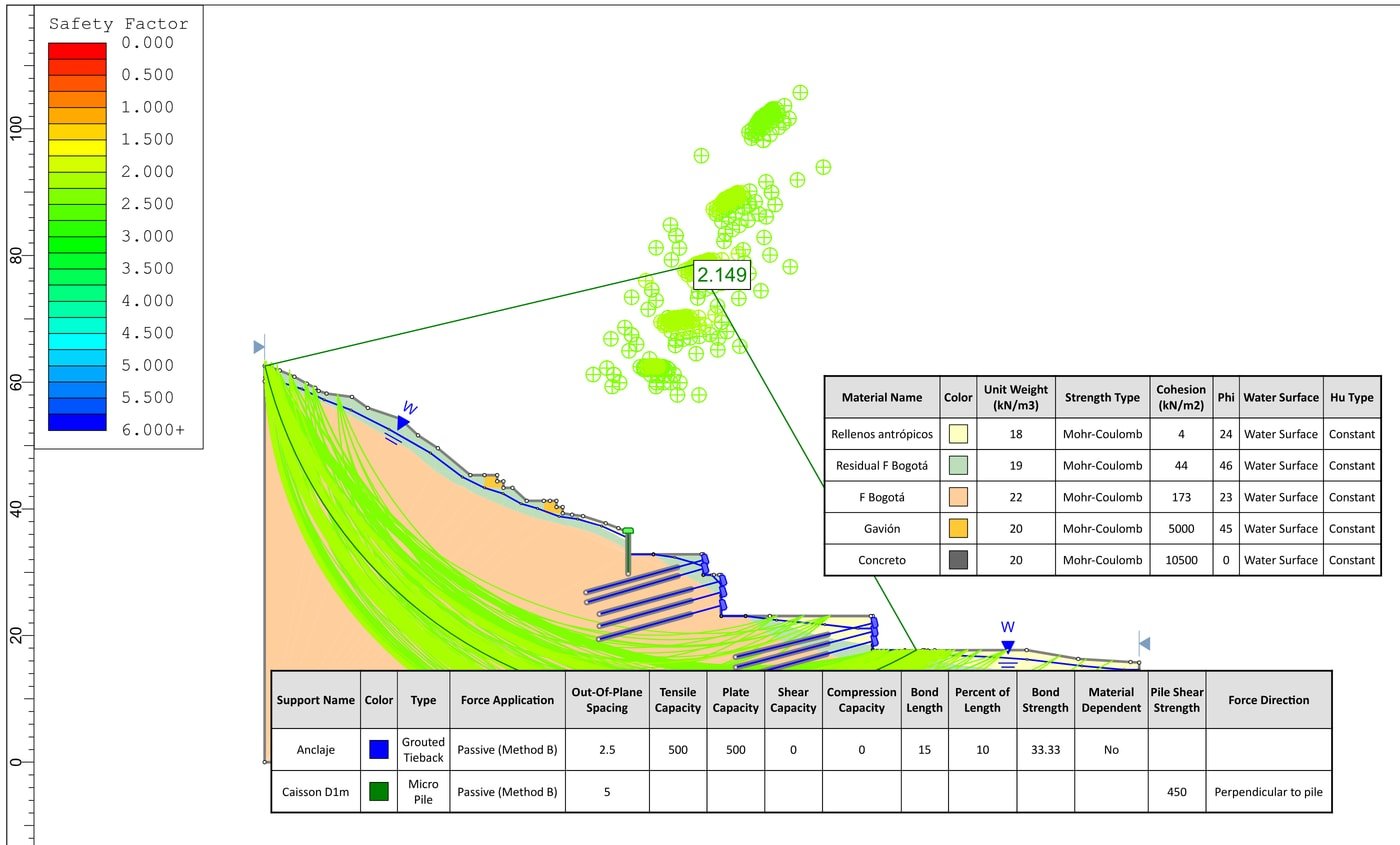
Slope stability studies
We assess whether a natural or engineered slope is stable, under what conditions it
stops being so, and which stabilisation works are proportionate to the risk. We analyse
static and pseudo-static conditions, and the effect of water, which is usually the real
trigger.
The scope does not end at diagnosis. It starts with the site walkover and the
investigation, continues with the tests that fix the strength parameters of each
stratum, and reaches the design of the retaining works with the factor of safety
achieved under each condition analysed.
- Investigation and characterisation of the slope material
- Stability modelling under static and pseudo-static conditions
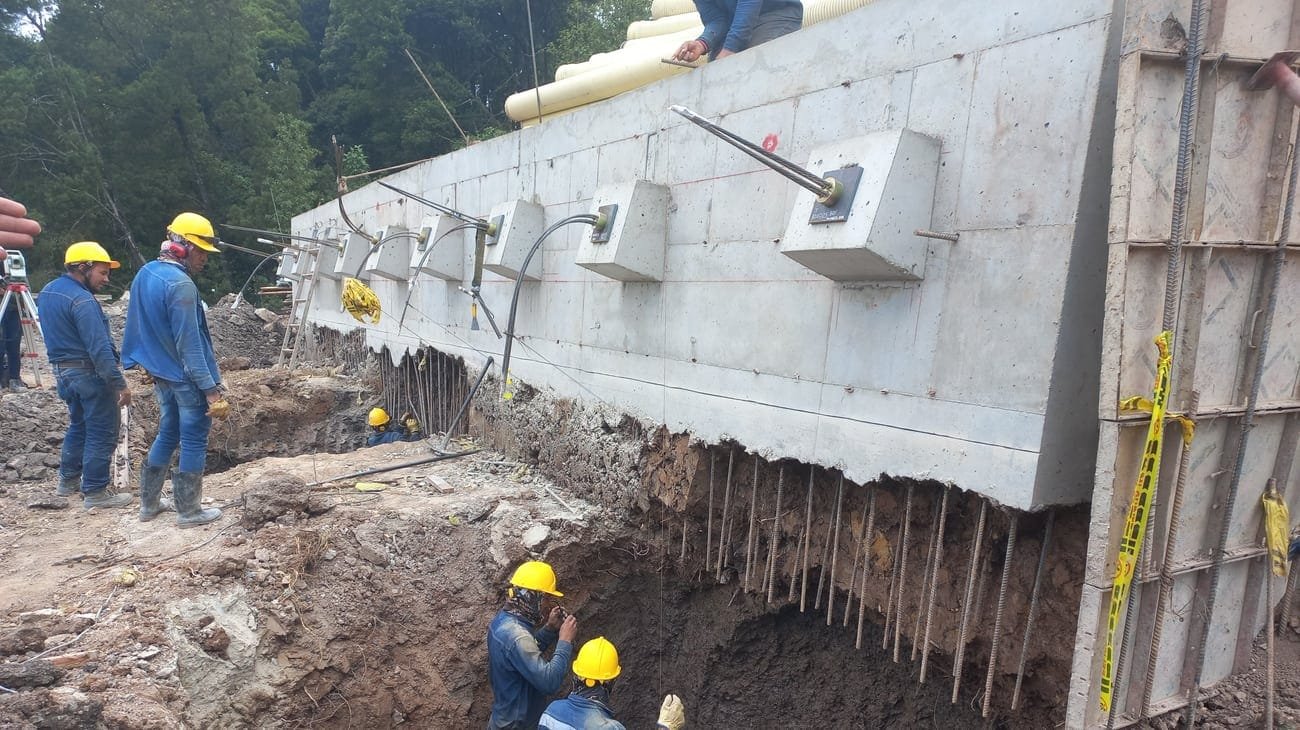
- Design of the retaining works: ground anchors, caissons, walls or gabions
What the standards require
- NSR-10, Title H. Governs excavations, slope stability and retaining structures, and sets the minimum factors of safety the design must meet under static and seismic conditions.
- Seismic coefficient. The pseudo-static analysis uses the design acceleration derived from Title A of NSR-10 for the zone where the project is located.
- INVIAS. On road projects, the INVIAS guidance on the design of stabilisation and landslide remediation works applies, together with its construction specifications.
- Material characterisation. Strength parameters must come from tests carried out under the corresponding INV E, ASTM or NTC standards, not from assumed values taken from the literature.
- Instrumentation and monitoring. Where the level of risk warrants it, the scope includes piezometers and inclinometers to verify how the slope actually behaves.
03 — Quote your
Site investigation and laboratory campaign
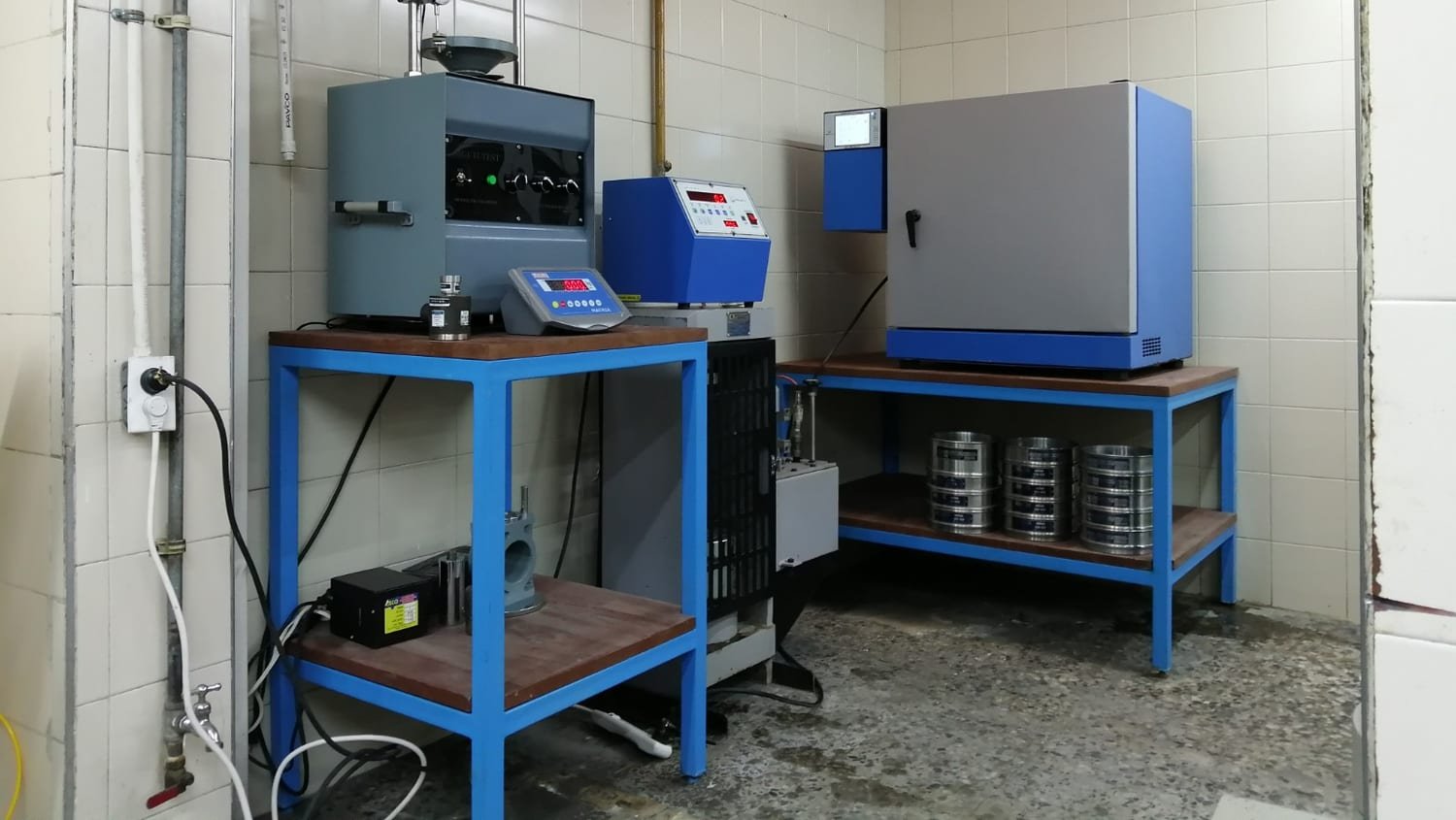
We run the whole campaign with our own equipment and process the samples in our
laboratory, which lets us control response times and the traceability of every result.
We quote per borehole, per metre investigated or as a fixed-scope campaign.
What the standards require
- INVIAS test standards (INV E series). Every laboratory test is run under its corresponding standardised procedure. Our catalogue of 38 tests states the applicable standard in each case.
- NSR-10, Title H. Defines the minimum number, the distribution and the depth of boreholes according to the category of the construction unit, and the type of sampling required.
- ASTM, AASHTO and NTC. Standard penetration, vane shear, undisturbed sampling with Shelby tubes and dynamic cone penetrometer testing are governed by the adopted international standards.
- IDU specifications. On projects within Bogotá, the technical specifications of the Urban Development Institute set additional testing and materials control requirements.
- Traceability. Every sample must keep its label, chain of custody and field record so the result can be audited by the construction supervisor.
04 — Quote your
Pavement design
We design flexible and rigid pavement structures from the actual characterisation of the
subgrade and the projected traffic, not from thicknesses adopted by analogy. It includes
alternatives compared by construction and maintenance cost.
What the standards require
- INVIAS. The design is based on the asphalt pavement design manuals of the National Roads Institute, which differentiate the procedure according to the traffic volume of the road.
- Design traffic. Must be expressed in equivalent 8.2-tonne axles accumulated over the design period, based on traffic counts or substantiated projections.
- Subgrade characterisation. Requires CBR or resilient modulus testing and soil classification under the corresponding INV E standards.
- Construction specifications. Granular materials and asphalt mixtures must comply with the INVIAS General Road Construction Specifications, or the IDU technical specifications where the project is in Bogotá.
- Drainage. The design must resolve subsurface water management: without adequate drainage the structure fails before its design life, however well it is dimensioned.
05 — Quote your
Civil works
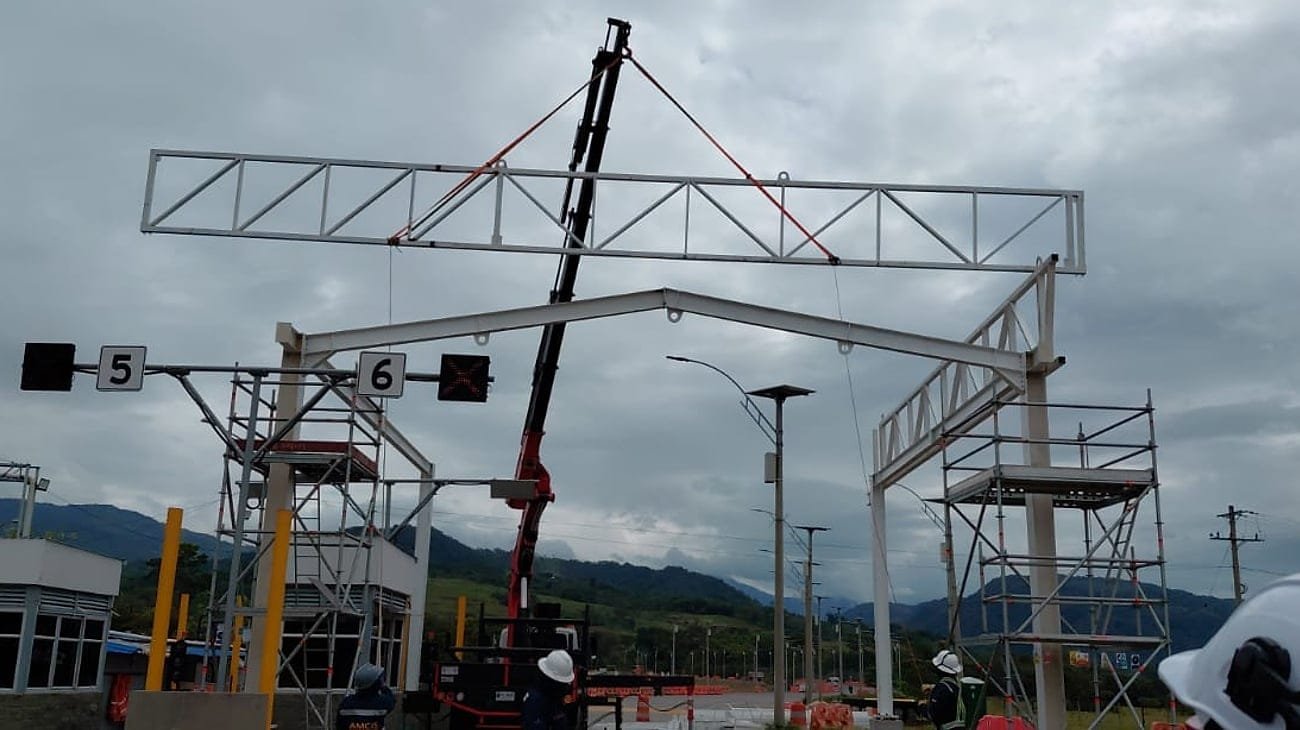
We build institutional and industrial premises, hydraulic works, pavements and
infrastructure upgrades. We quote with a bill of quantities broken down by chapter,
a programme and a quality plan, so that control during delivery is verifiable.
What the standards require
- NSR-10. Construction must follow the approved structural design and the titles that apply to it: loads, structural concrete, steel structures and masonry, according to the construction system.
- Technical supervision. NSR-10 requires independent technical supervision for buildings above the thresholds it defines, and Law 400 of 1997 establishes the responsibilities of each party.
- Colombian Bridge Code CCP-14. Bridges and highway structures are designed and built under this code, on an LRFD basis, not under NSR-10.
- Construction specifications. On road works the INVIAS General Construction Specifications apply; in Bogotá, the IDU technical specifications for materials and construction.
- Quality control. Acceptance tests —concrete strength, compaction, particle size— must be carried out at the frequency set by the specification and documented for the supervisor.
06 — Quote your
Specialised studies
Building pathology, seismic vulnerability, strengthening design, hazard and risk studies,
and expert reports on existing structures. These are the commissions where diagnosis
matters more than calculation: first you have to understand why it is failing.
What the standards require
- NSR-10, Chapter A.10. Governs the assessment and intervention of buildings erected before the Regulation came into force: how to assess vulnerability, what level of safety the intervention must reach and how it is documented.
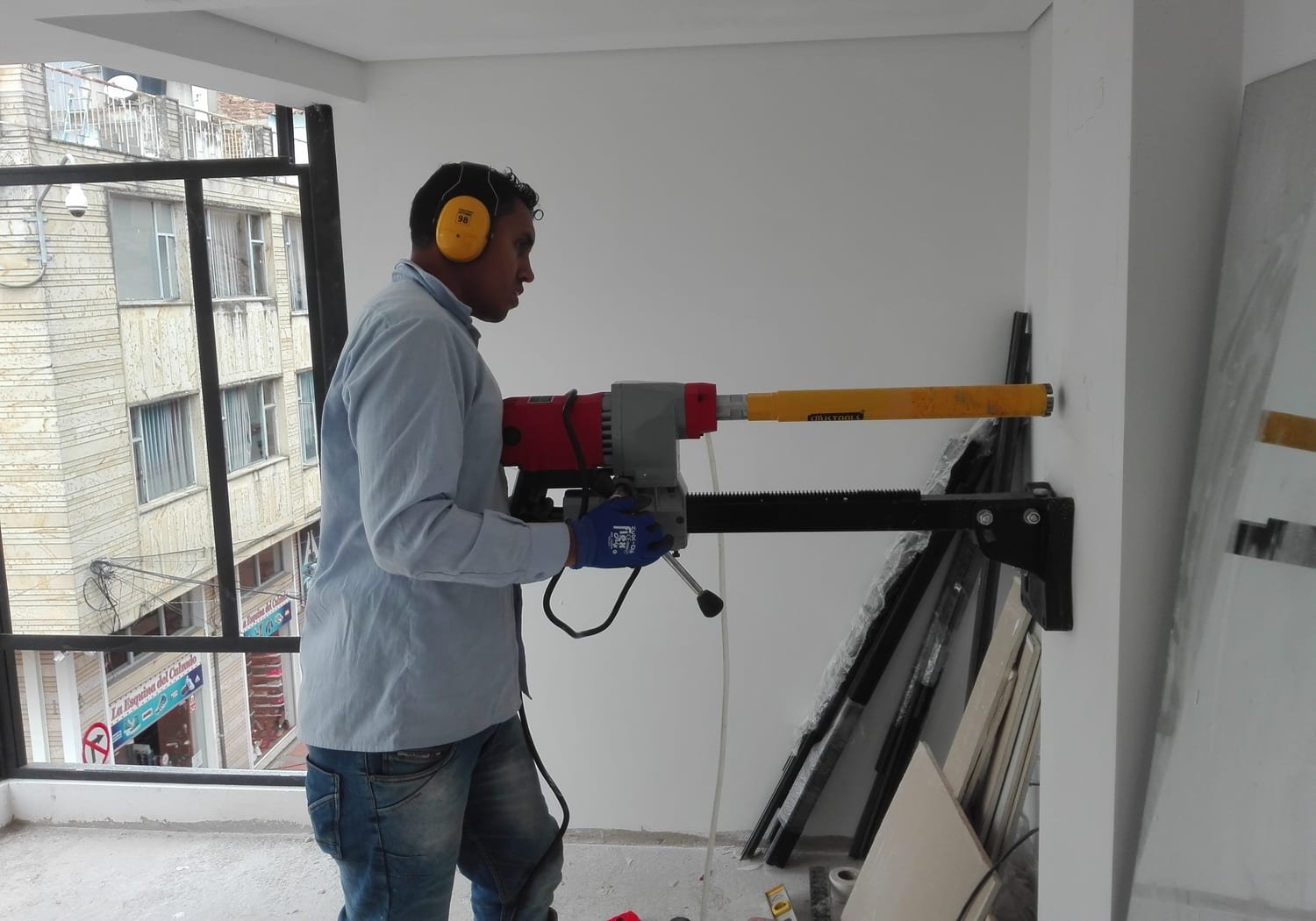
- Verification of the existing material. The real strength of the concrete is verified by core extraction and testing, and by complementary methods such as rebound hammer testing, under the applicable INV E, NTC or ASTM standards.
- Rebar detection. The survey of existing steel —diameter, spacing and cover— is carried out with an electromagnetic scanner and confirmed by inspection chases.
- Strengthening design. Once the residual capacity is established, the strengthening is designed under the NSR-10 titles corresponding to the material and the structural system.
- Highway structures. The assessment and strengthening of bridges are governed by the Colombian Bridge Code CCP-14.