
From the ground up to the finished works
Five service lines and a laboratory to respond with engineering judgement at every stage of the project.
Geotechnical design
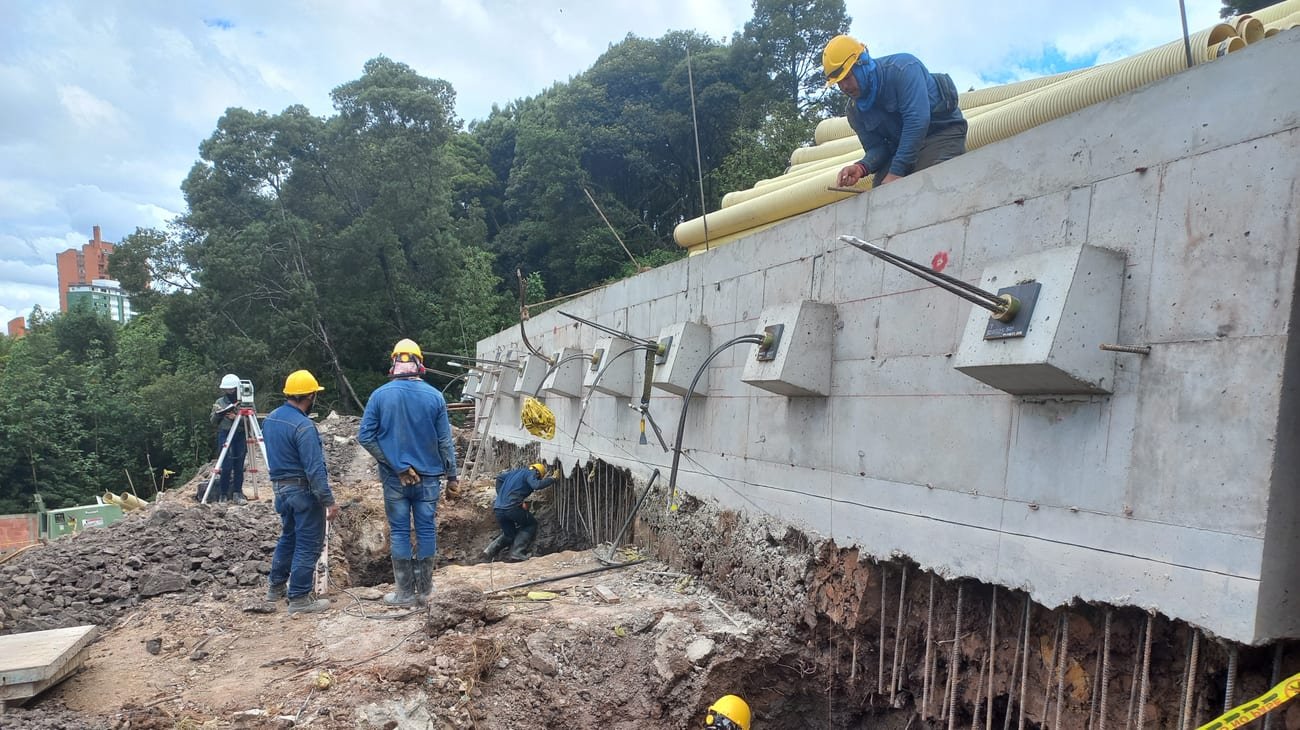
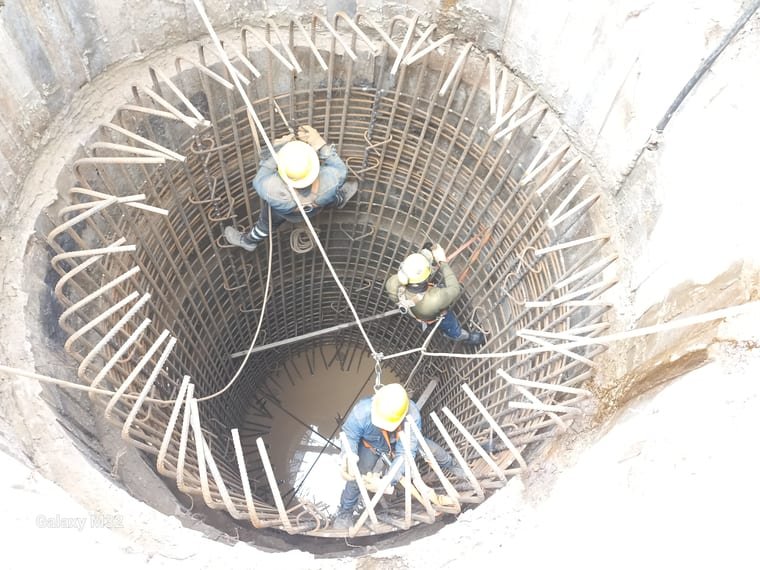
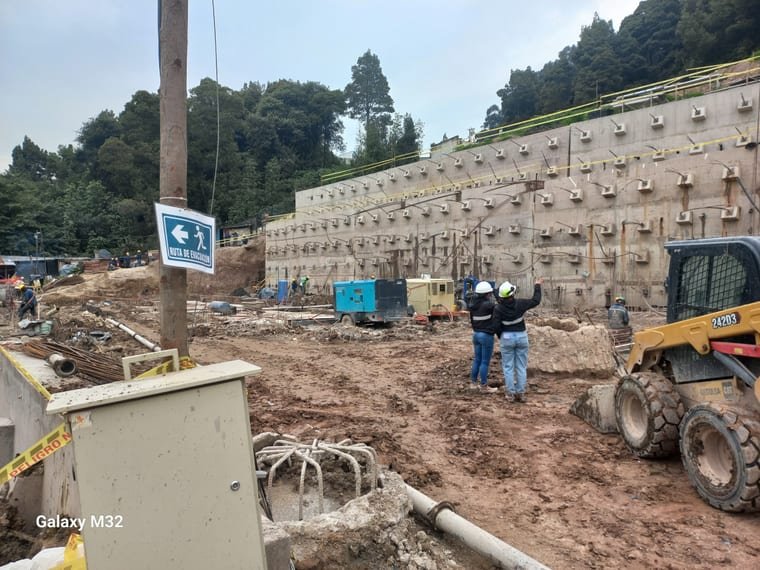
We characterise the ground and turn that information into design decisions: which foundation, which pavement, how stable a slope is and what risk the project is taking on.
The study does not end with the report: we support the design stage, answering the questions that come up as the project develops and the loads, the layout or the excavation level change. That continuity avoids having to redo the investigation halfway through.
- Soil investigation and foundation design
- Pavement design
- Slope stability analysis
- Hazard and risk studies
- Soil resistivity studies
Regulatory framework
- NSR-10, Title H. Construction unit category, minimum number and depth of boreholes, design parameters and allowable settlements.
- NSR-10, Title A. Soil profile and local site effects used to define the seismic design spectrum.
- INVIAS and IDU. Pavement design manuals and construction specifications according to the authority and the project location.
Structural design
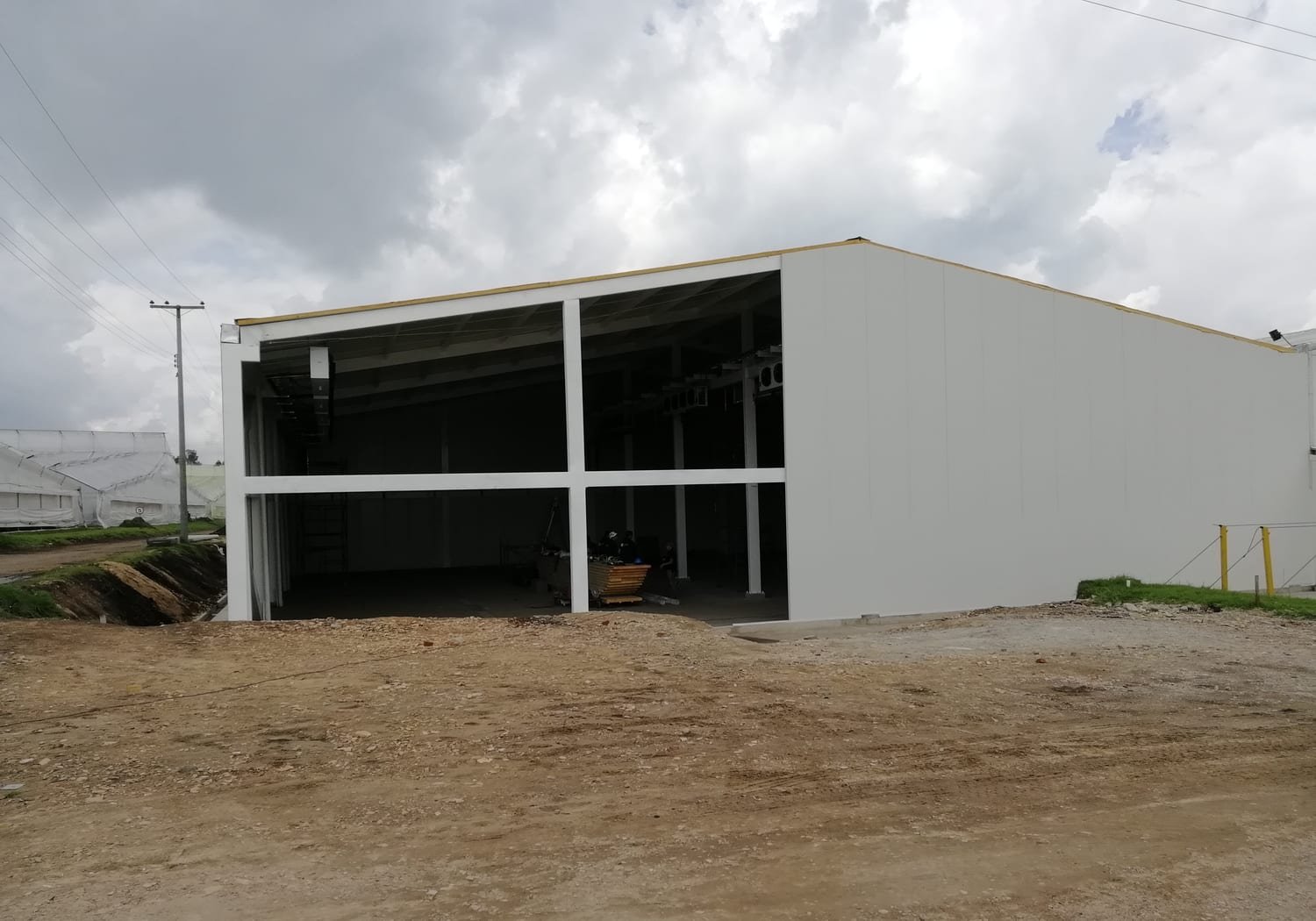
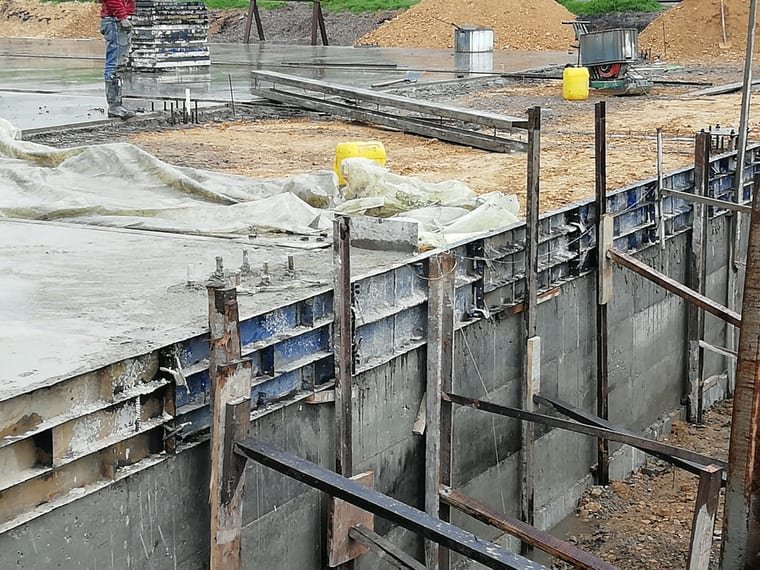
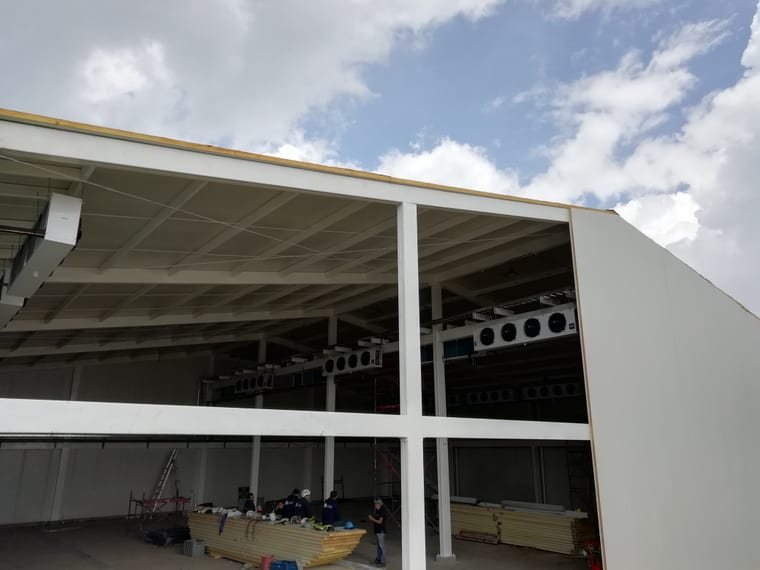
We design new structures and assess existing ones: how much capacity they have left, what defects they carry and how to strengthen them.
We work with geotechnical design in the same office, so the reactions from the structure and the capacity of the ground are resolved against the same model rather than against two separate assumptions. That is where cost overruns usually appear on projects with separated disciplines.
- Design of residential and industrial buildings
- Highway structures and drainage works
- Structural strengthening
- Seismic vulnerability studies
Regulatory framework
- NSR-10, Titles A and B. Seismic design requirements, zoning, design spectrum and load combinations.
- NSR-10, Titles C, D, E and F. Structural concrete, masonry, one- and two-storey houses, and steel structures, according to the structural system.
- Colombian Bridge Code CCP-14. Applies to bridges and highway structures, on an LRFD basis, instead of NSR-10.
Building pathology
Before deciding how to intervene in a structure you have to understand why it is deteriorating. We diagnose the true origin of the damage —mechanical, physical, chemical or electrochemical— and separate cosmetic defects from those that compromise load-bearing capacity, so that repair money goes where it is actually needed.
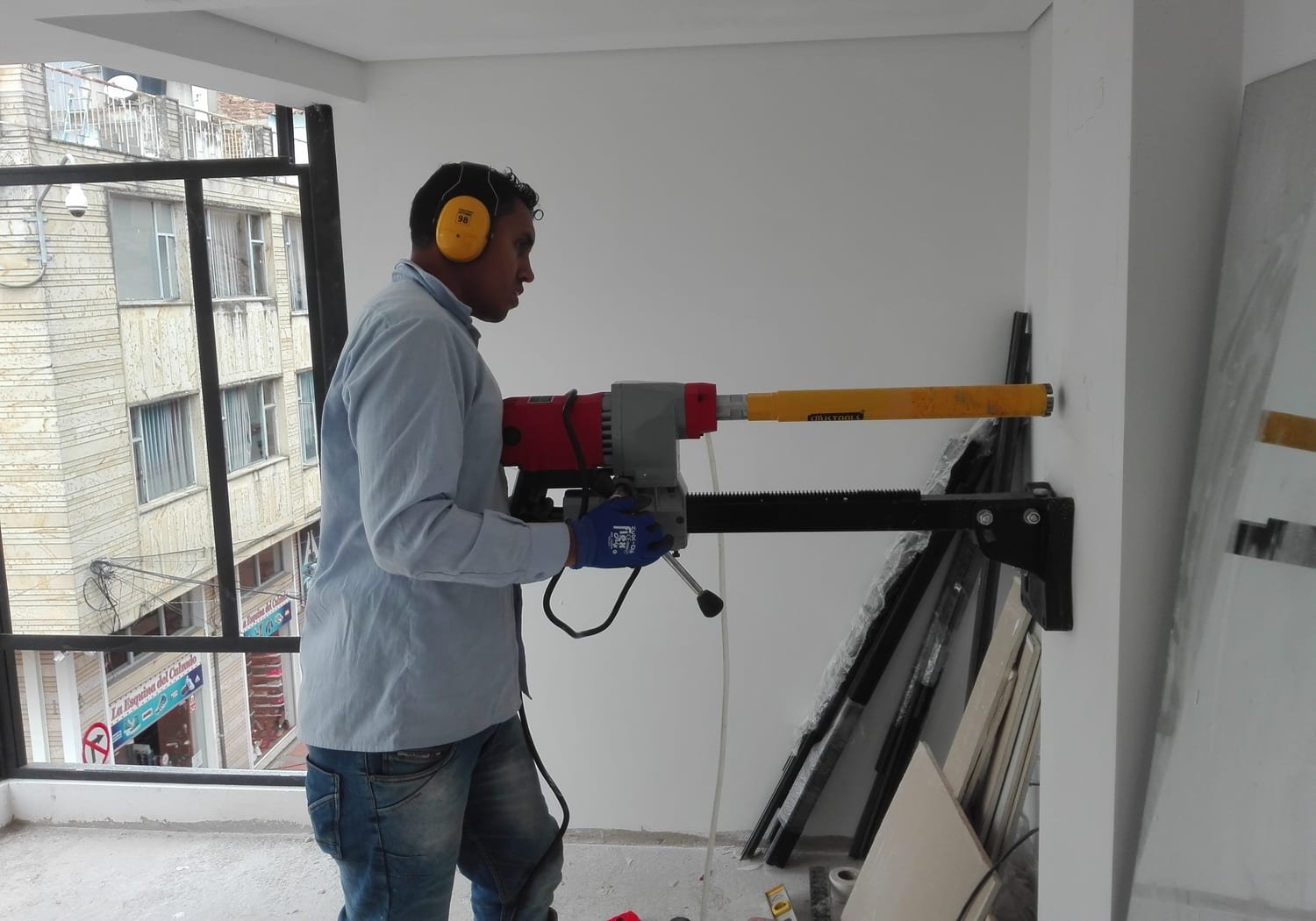
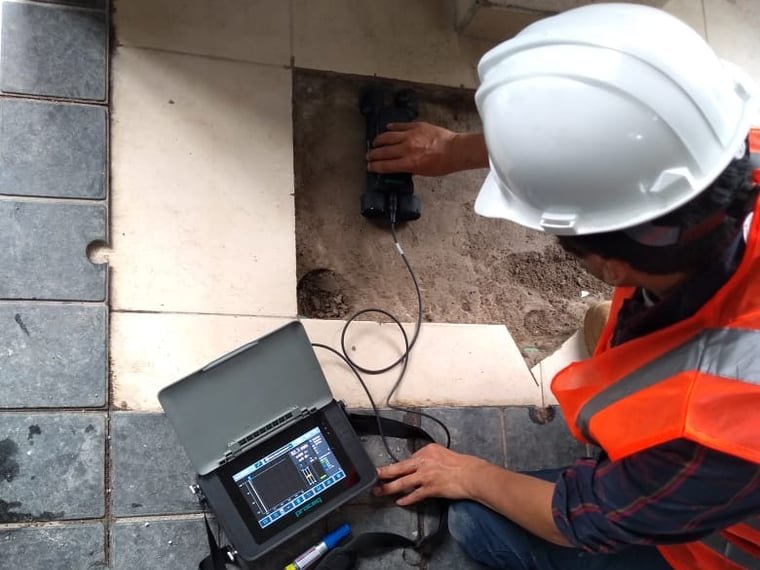
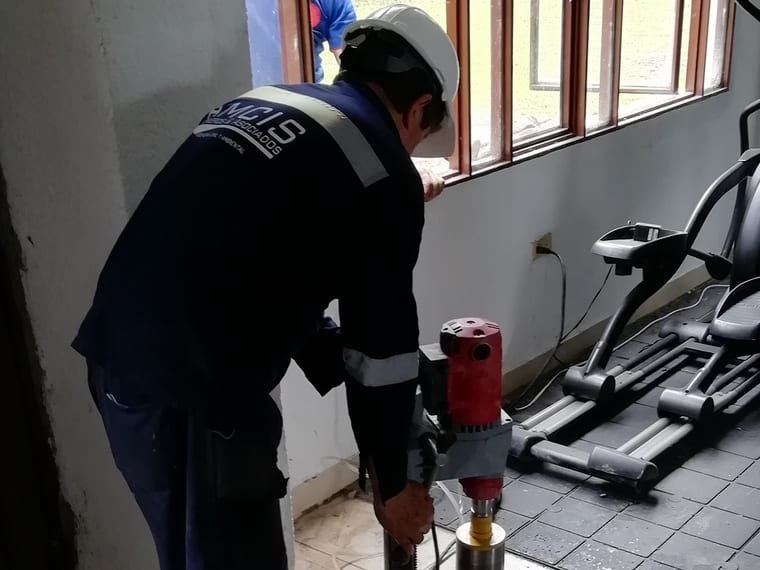
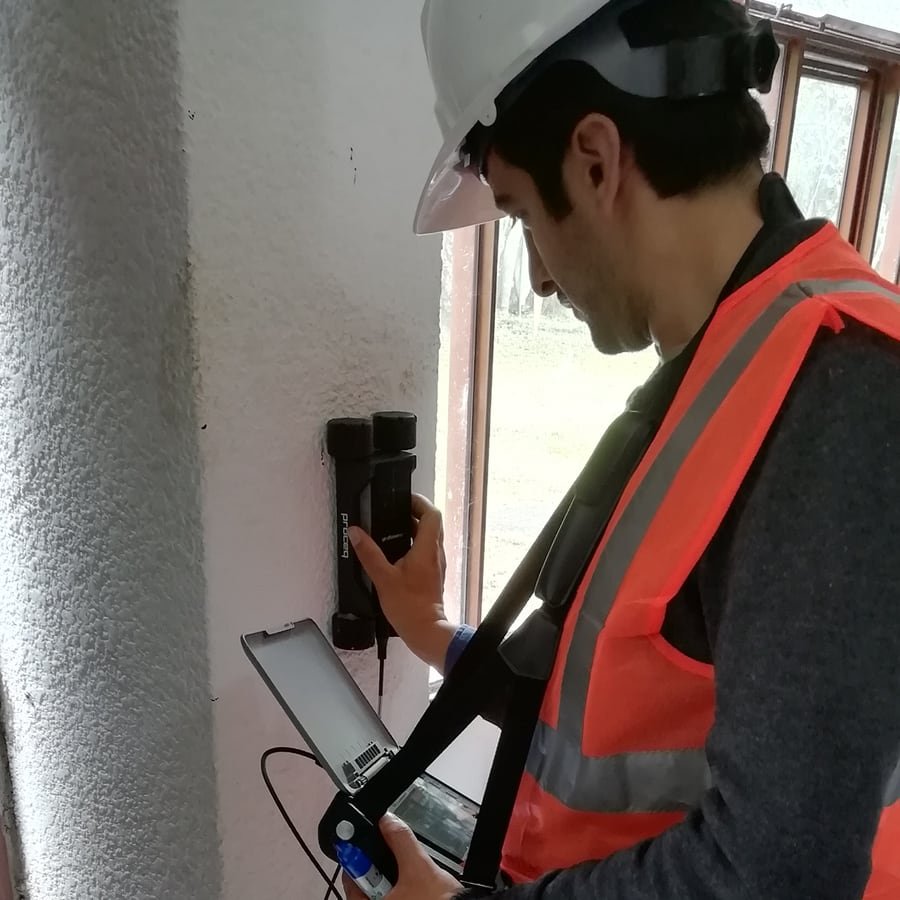
We work with detailed on-site inspection, non-destructive testing and verification of the material's real strength, supported by our laboratory and by rebar detection equipment. The result is not a list of defects: it is a technical opinion with cause, extent and an intervention protocol.
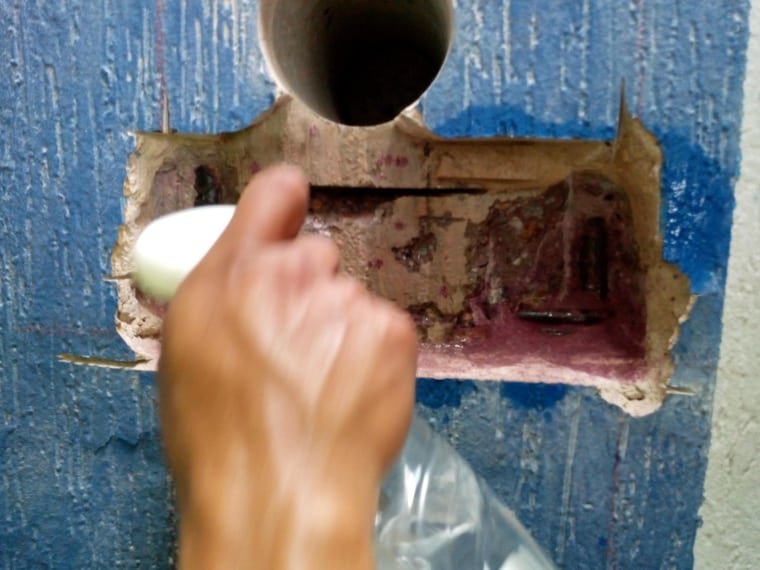
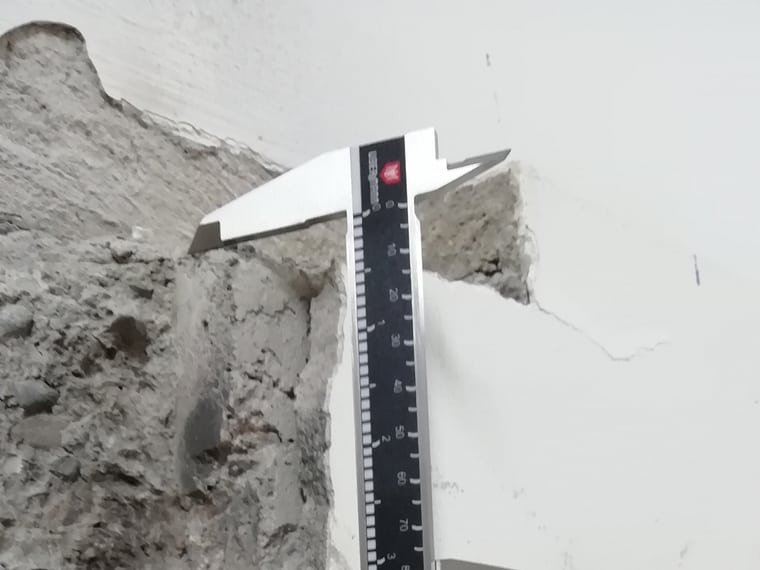
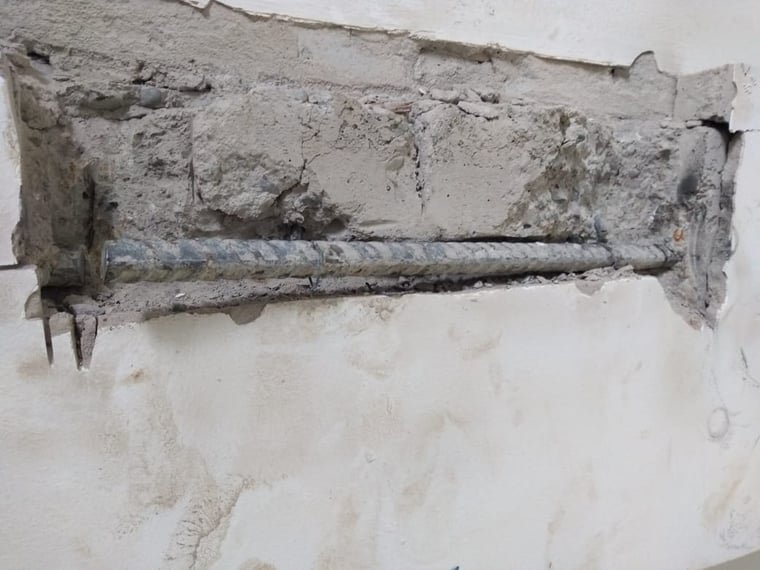
- Survey and cataloguing of defects: cracking, reinforcement corrosion, damp, spalling and section loss
- Non-destructive testing: cover meter and rebound hammer on hardened concrete
- In-situ strength verification by coring and testing
- Determination of causes and deterioration mechanisms
- Seismic vulnerability assessment and residual structural capacity
- Strengthening design and definition of the intervention protocol
- Expert reports and technical opinions on the condition of existing structures
Regulatory framework
- NSR-10, Chapter A.10. Governs the assessment and intervention of buildings erected before the Regulation came into force: the level of safety the intervention must reach and how it is documented.
- Testing of the existing material. Core extraction and rebound hammer testing under the applicable INV E, NTC and ASTM standards for hardened concrete.
- Colombian Bridge Code CCP-14. Governs the assessment and strengthening of bridges and highway structures.
Site investigation
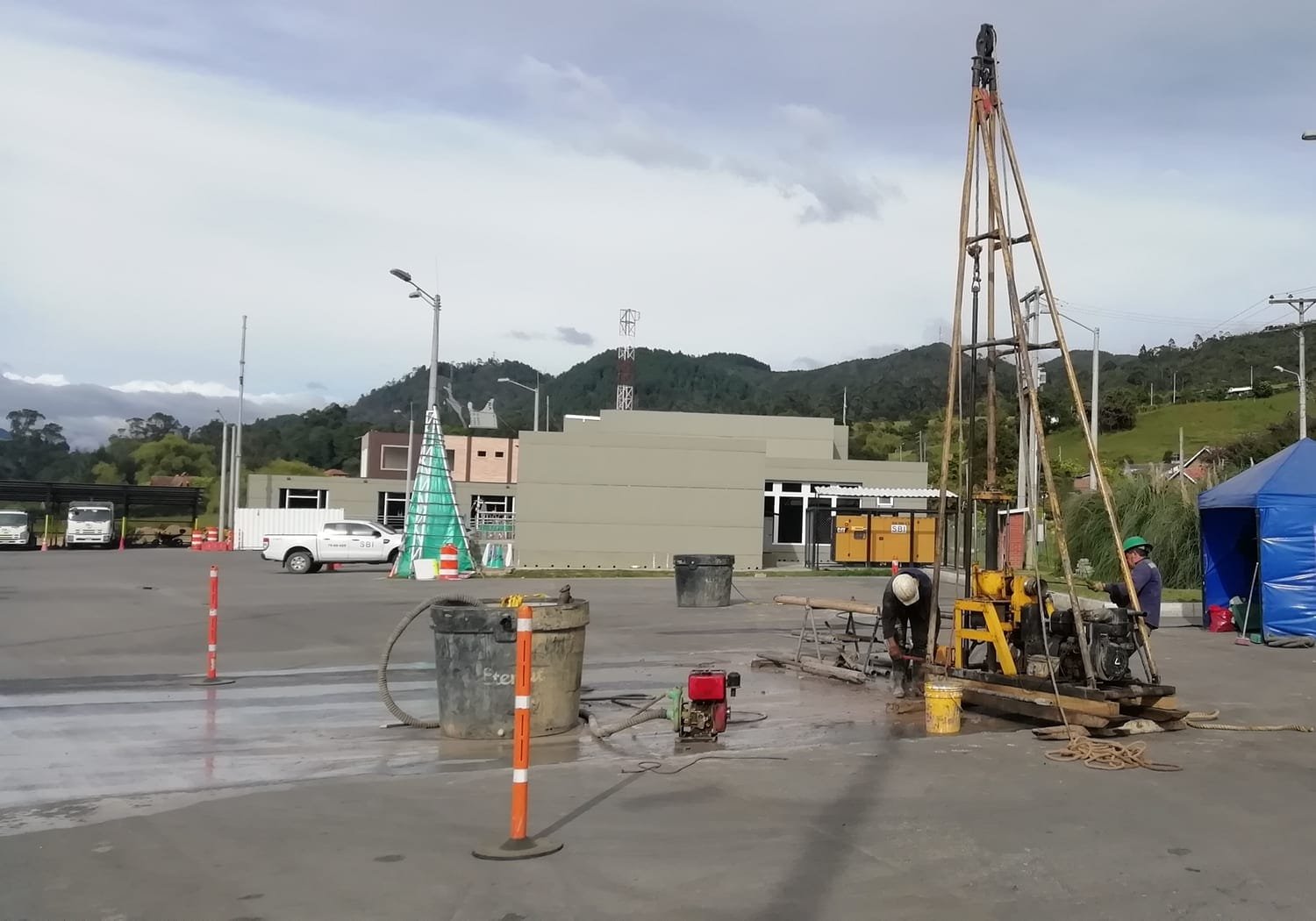
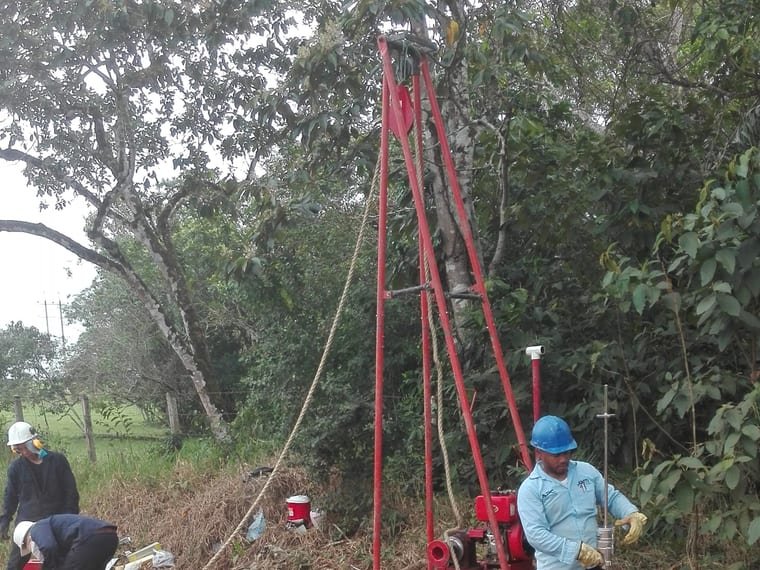
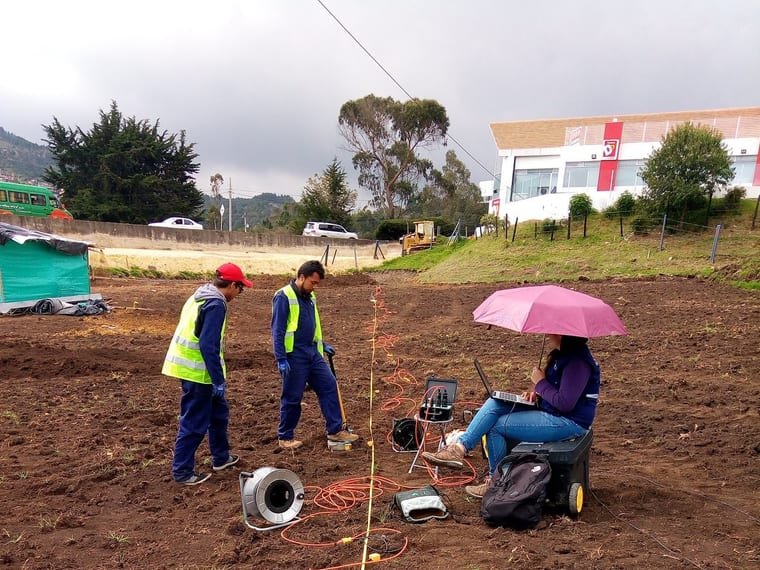
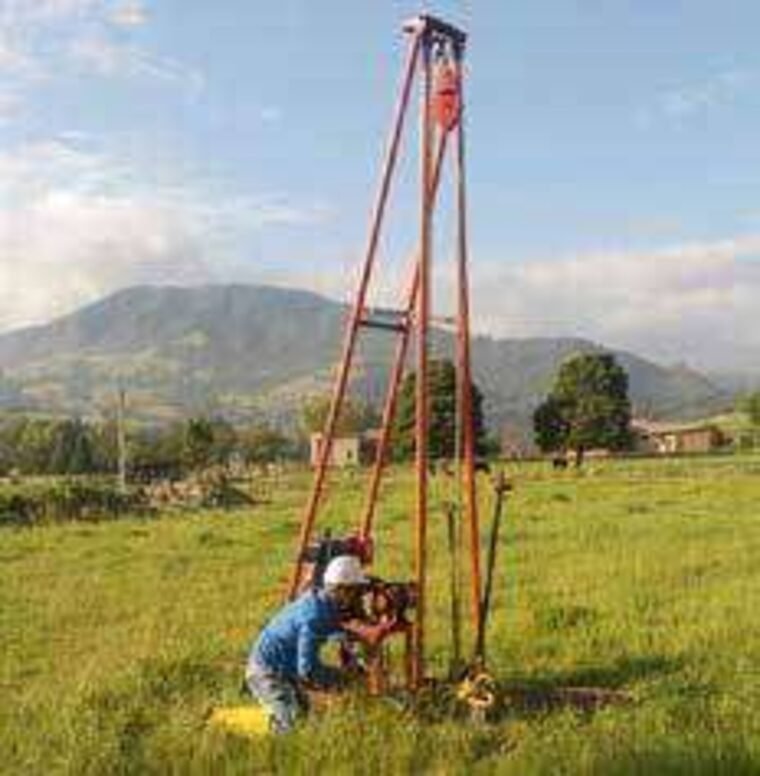
We run investigation campaigns with our own equipment, from hand-dug test pits through to rotary boreholes with continuous core recovery and seismic refraction lines.
- Test pits and trenches for roads and slope stability
- Dynamic cone penetrometer (DCP)
- Conventional rotary boreholes and hand augering
- SPT, vane shear and undisturbed sampling with Shelby tubes
- Conventional or continuous sampling in soils and rock
- Geophysical surveying and interpretation
Regulatory framework
- INVIAS test standards (INV E series). The standardised procedure for every field and laboratory test.
- NSR-10, Title H. Minimum number, distribution and depth of boreholes according to the category of the construction unit.
- ASTM, AASHTO and NTC. Standard penetration, vane shear, undisturbed sampling with Shelby tubes and dynamic cone penetrometer testing.
Project management
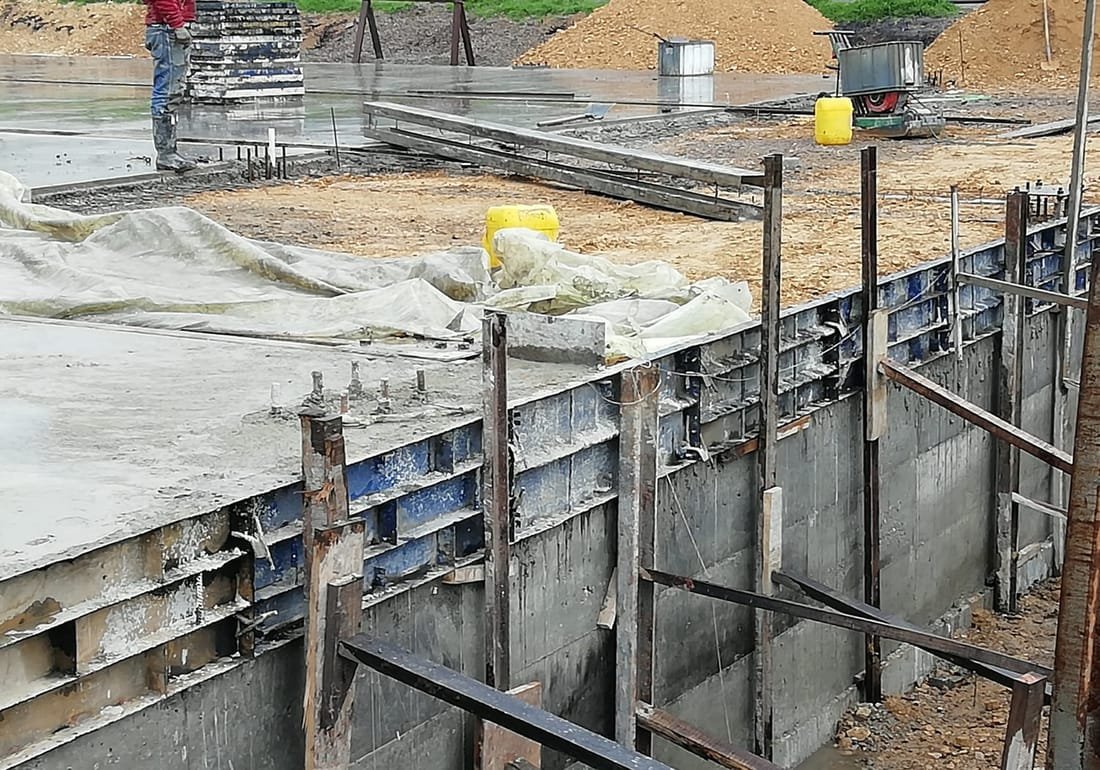
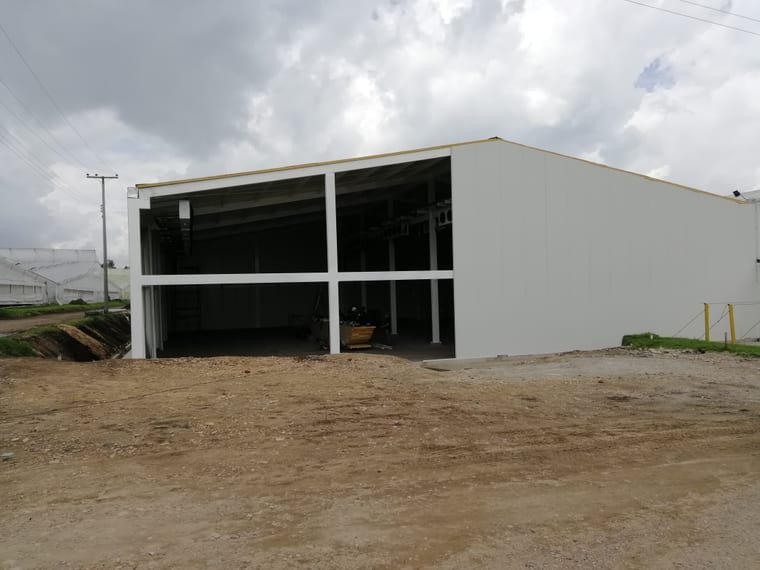
We structure, programme and control infrastructure projects, and act as integrated construction supervisor on works and consulting contracts. It is the line that connects design with delivery and keeps control over time, cost and quality.
Having built works ourselves changes how we supervise: we know which outputs are realistic, which activities hide float and at what point a delay can still be recovered. And the other way round, supervision disciplines the way we plan our own contracts.
- Cost estimating and construction programming
- Structuring and management of infrastructure projects
- Technical, administrative, financial and accounting supervision
- Engineering, procurement and construction (EPC)
Regulatory framework
- Law 400 of 1997 and NSR-10. They set out the responsibilities of designer, contractor and technical supervisor, and the cases in which independent technical supervision is mandatory.
- Construction specifications. INVIAS General Specifications on road works, or IDU technical specifications on projects in Bogotá.
- Quality control. Frequency and type of acceptance testing required by the applicable specification, documented for the supervisor.
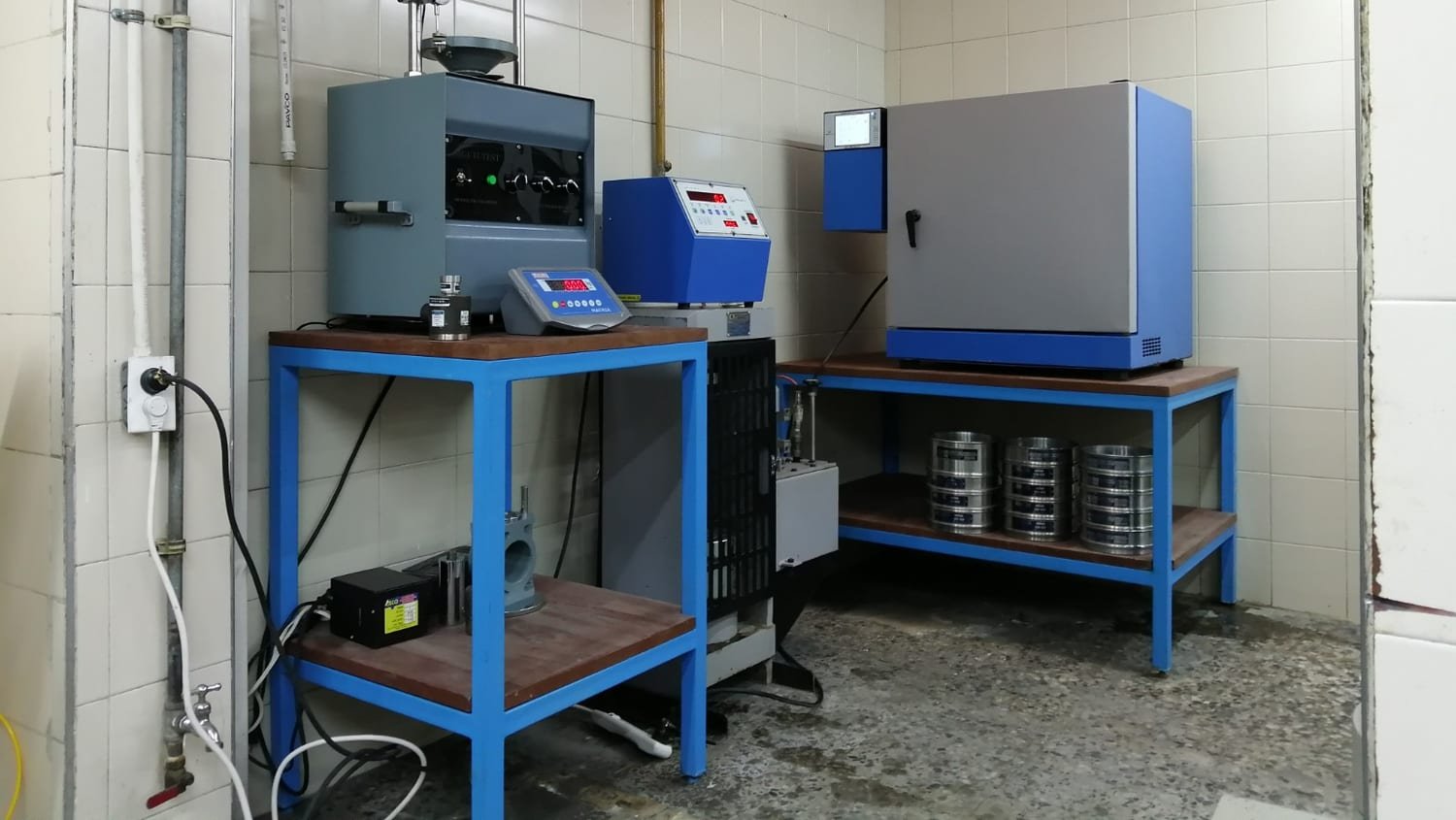
Laboratory for soils, rock,
pavements, concrete and materials
Laboratory in Bogotá. Time control, traceable results and tests run under INV E, ASTM, AASHTO, NTC and UNE standards.
Test catalogue
| Code | Test | Type | Standard |
|---|---|---|---|
| LAB-AC001 | Natural moisture content | Soils | INV E-122-13 |
| LAB-AC002 | Liquid and plastic limits | Soils | INV E-125-13 · INV E-126-13 |
| LAB-AC003 | Shrinkage limit | Soils | INV E-129-13 |
| LAB-AC004 | Wash through No. 200 sieve | Soils | INV E-123-13 |
| LAB-AC005 | Particle size analysis by sieving | Soils | INV E-213-13 |
| LAB-AC006 | Soil unit weight | Soils | ASTM D2937-71 |
| LAB-AC007 | Specific gravity of soils | Soils | INV E-128-13 |
| LAB-AC008 | Identification of expansive soils | Soils | INV E-132-13 |
| LAB-AC009 | Unconfined compressive strength | Soils | INV E-152-13 |
| LAB-AC010 | Direct shear on soils, consolidated undrained (CU) | Soils | INV E-154-13 |
| LAB-AC011 | Direct shear on soils, consolidated drained (CD) | Soils | INV E-154-13 |
| LAB-AC012 | One-dimensional consolidation — Method A | Soils | INV E-151-13 |
| LAB-AC013 | One-dimensional consolidation — Method B | Soils | INV E-151-13 |
| LAB-AC014 | CBR test — undisturbed sample | Soils | INV E-148-13 |
| LAB-AC015 | Laboratory CBR test | Soils | INV E-148-13 |
| LAB-AC016 | Modified compaction test on soils | Soils | INV E-142-13 |
| LAB-AC023 | Free swell expansion | Soils | INV E-173-13 |
| LAB-AC024 | Soil collapse index | Soils | INV E-157-13 |
| LAB-AC025 | Permeability of granular soils | Soils | INV E-130-13 |
| LAB-AC026 | Pinhole dispersion test | Soils | ASTM D4647-93 |
| LAB-AC027 | Baumann-Gully acidity test | Soils | UNE-EN 16502 |
| LAB-AC039 | Indirect tensile strength | Rock | INV E-725-13 |
| LAB-AC040 | Uniaxial compressive strength of rock | Rock | ASTM D2938 |
| LAB-AC041 | Point load strength of rock | Rock | ASTM D2166-91 |
| LAB-AC042 | Indirect tensile strength | Concrete | INV E-725-13 |
| LAB-AC043 | Compressive strength of concrete cylinders | Concrete | INV E-410-13 |
| LAB-AC044 | Rebar detection with cover meter | Concrete | — |
| LAB-AC045 | Rebar detection by chasing | Concrete | — |
| LAB-AC046 | Compressive strength by rebound hammer | Concrete | INV E-413-13 |
| LAB-AC050 | Soundness of aggregates | Aggregates | INV E-220-13 |
| LAB-AC051 | Fractured faces | Aggregates | INV E-230-13 |
| LAB-AC052 | Methylene blue value | Aggregates | INV E-148-13 |
| LAB-AC054 | Soluble salt content | Aggregates | INV E-158-13 |
| LAB-AC055 | Sulfur content in aggregates | Aggregates | INV E-233-13 |
| LAB-AC056 | Los Angeles abrasion | Aggregates | INV E-219-13 |
| LAB-AC080 | Asphalt content | Asphalt | INV E-732-13 |
| LAB-AC082 | Maximum specific gravity of asphalt mixtures | Asphalt | INV E-735-13 |
| LAB-AC083 | Particle size analysis of asphalt mixtures | Asphalt | INV E-732-13 · ART 450 |
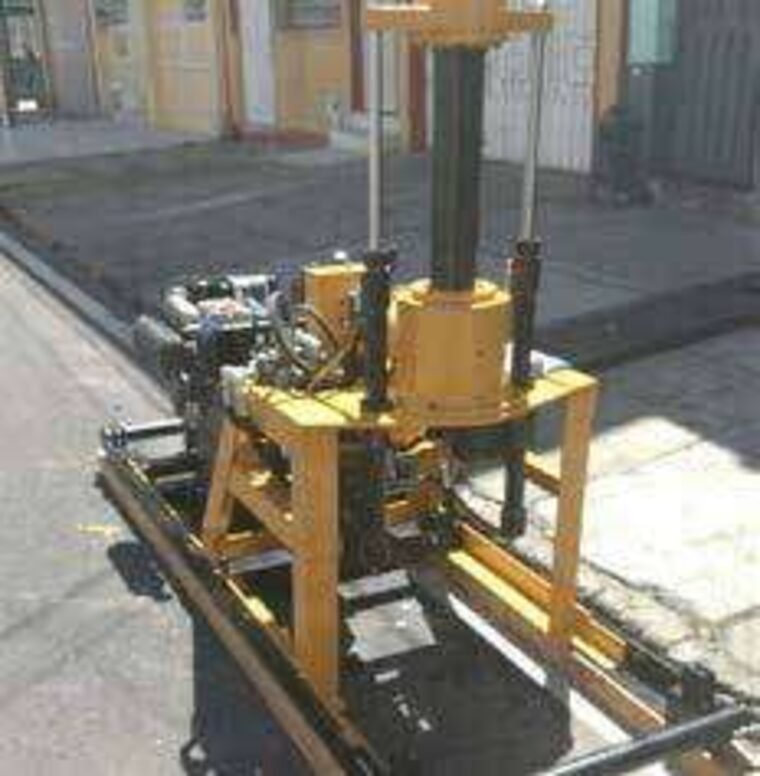
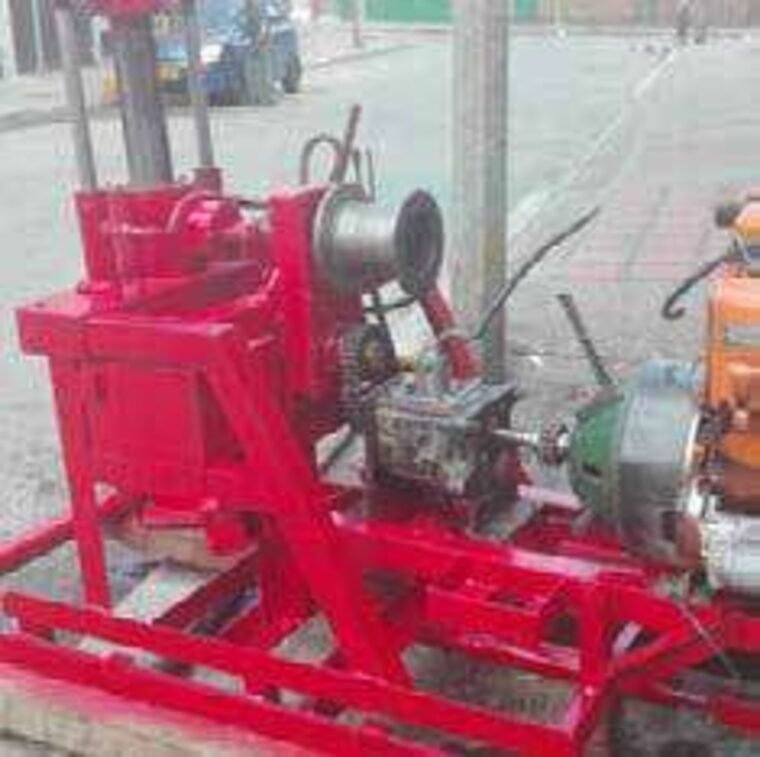
Our own equipment on site
Drilling rigs, geophysical equipment and non-destructive testing gear that let us respond without depending on third parties.
Need a study or a test?
Tell us the scope and we will send you a quote with times and applicable standards.